
How Are Universities Taking Inspiration from Workplace Design?
11th May, 2026
In today's evolving educational landscape, universities are continuing to redefine traditional learning environments to better align with the dynamic needs of modern students and the expectations of the working world.
Alex Hunt, Senior Partner and Managing Director at Maris, explores how higher education is increasingly drawing on workplace design principles to create more dynamic, engaging and future-focused campuses.
At the core of this shift is a move towards flexibility, choice and experience. Much like modern offices, universities are designing spaces that support different ways of working – encouraging movement, collaboration and autonomy in how students engage with their environment.
The Changing Learning Environment
The COVID-19 pandemic accelerated a shift that was already underway. Students became used to flexible, self-directed ways of working at home, raising expectations around comfort, adaptability and control over their surroundings.
Now, universities are responding by creating environments that reflect these behaviours. Spaces are less rigid and more adaptable, supporting everything from focused individual study to informal collaboration.
This evolution isn’t just about aesthetics – it’s about creating settings that feel intuitive and aligned with how people naturally work and learn today.
Encouraging Students to Stay on Campus
A key challenge for universities is encouraging students to spend more meaningful time on campus, rather than simply attending scheduled lectures.
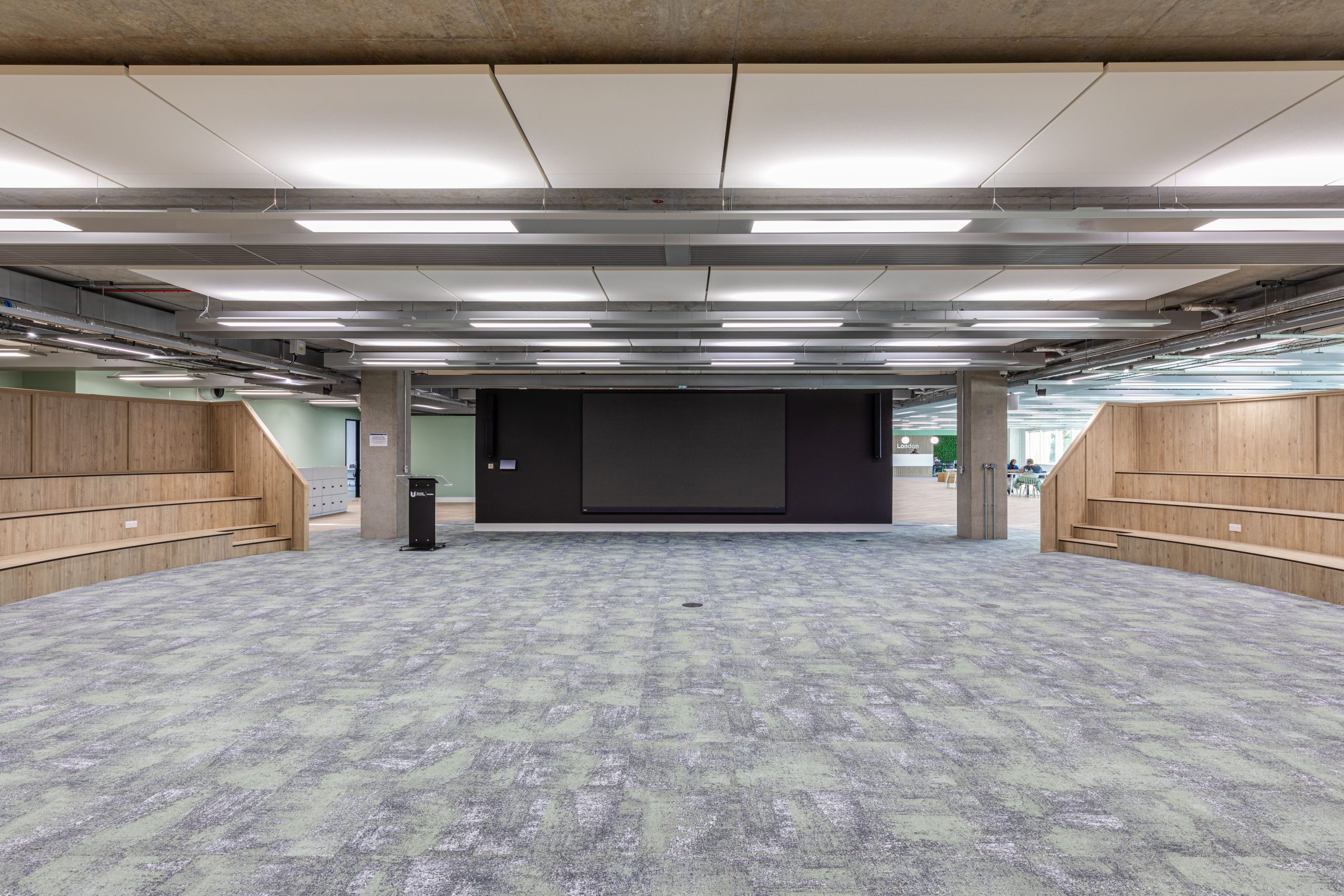
In response, institutions are moving away from purely lecture-led models and instead creating a wider variety of learning settings. Bleacher seating, collaborative booths, high tables and informal breakout areas all help to create a more engaging and sociable environment.
Historically, teaching was often delivered through long, didactic sessions followed by independent study. Increasingly, content is now shared in advance, allowing in-person time to focus on discussion, collaboration and interaction. The result is a more engaging campus experience, where time on-site is centred around interaction, collaboration and shared learning, not just scheduled teaching.

Preparing Students for the Future of Work
Today’s universities are not only centres of learning but also incubators for future professionals. Access to specialist tools, technologies and working environments is a major part of this. By exposing students to experiences they wouldn’t otherwise have, universities help bridge the gap between education and employment.
This often means designing spaces that reflect real-world environments – from corporate offices and laboratories to mock hospitals and creative studios. These settings allow students to develop practical skills alongside academic knowledge, building confidence and familiarity with their chosen industries.

Designing Aspirational Environments
The University of the West of Scotland (UWS) provides a strong example of this approach. Its campus at East India Docks, overlooking Canary Wharf, places students in direct view of the environment many aspire to work in. Therefore, we designed the university space around the look and feel of a corporate office, reminding them that this is an experience that’s about their future – they’re not at school anymore.
Creating a Commercial Mindset
Across other institutions, Teesside University Developed spaces that felt like a professional gaming studio, while the fashion school at UCA set out to create an education environment that goes beyond design teaching to include the business skills associated with fashion as well. This included visual merchandising spaces where leading designers would donate end of season window displays so students could learn about the rationale behind them. For that, we drew on our experiences designing offices for the likes of Gant and brought that expertise into the design of the new university campus.

Bringing Workplace Thinking into Education
Collaboration between educational and commercial design sectors enriches the university experience. Drawing on insights from corporate design projects, we contribute valuable expertise to the evolution of educational facilities.
By bridging the gap between academia and industry, universities stay ahead of the curve, ensuring graduates are well-equipped for the challenges of tomorrow’s workplace. This alignment ensures that graduates leave not just with knowledge, but with the experience and confidence to apply it in real-world settings.
Overall, there’s a lot of alignment between the education design and commercial design worlds. Modern university design emerges as a catalyst for innovation and student success. By embracing the principles of flexibility, collaboration, and real-world relevance, institutions prepare graduates to thrive in an ever-changing global landscape. As universities continue to evolve, the synergy between education and industry will shape the future of learning for generations to come.
Want to Create a University Environment That Prepares Students for the Real World?
Speak to our team and explore workplace design principles that transform your education space into a more engaging environment.
You May Also Like
The End of “Safe Design” in Corporate Spaces
18th May, 2026
What Is Biophilic Design and Why Is It Reshaping the Modern Workplace?
5th May, 2026
How to Maximise Your Office Space and Make It Work for You
27th April, 2026
Why Brand Matters in Workplace Design
3rd February, 2025
Kind Words from Professor Nick Braisby of Buckingham New University
29th January, 2025
The Importance of Workplace Strategy and Design
8th January, 2025