
What Is Biophilic Design and Why Is It Reshaping the Modern Workplace?
2nd March, 2026
As organisations continue to rethink what the workplace should deliver in a post-pandemic world, one design philosophy is gaining real momentum: biophilic design.
With the average person now spending around 90% of their time indoors, we’ve effectively created environments that physically distances us from the natural world. Biophilic design goes beyond adding a few potted plants to an office desk. It is a highly structured approach to incorporating natural elements into architecture. At its heart, it’s about creating workplaces that feel better to be in – by drawing on the natural world in how they look, function and feel.
So what exactly is biophilic design, and why is it becoming so important for modern workplaces?

What Is Biophilic Design?
Biophilic design is based on the concept of biophilia – the belief that humans have an instinctive connection to nature and other living systems.
In practice, it means integrating natural elements, materials and patterns into architecture and interior design. This can include natural light, greenery, water features, natural materials such as wood and stone, or layouts and forms inspired by nature.
The International Living Future Institute describes it as an approach that “increases occupant connectivity to the natural environment through the use of direct nature, indirect nature, and space and place conditions.” In simple terms, it’s about bringing the outside world into the workplace in a way that feels intentional, not decorative.
Why Does Biophilic Design Matter in the Workplace?
The workplace has a direct influence on how people think, feel and perform. As hybrid working has shifted expectations, employees are now more selective about the quality of the environments they choose to spend time in.
Biophilic design plays a massive role in addressing this by improving wellbeing as much as productivity. Research consistently links exposure to natural light, materials and greenery with reduced stress levels, improved mood and increased productivity. Some studies suggest employees working in offices with natural elements can be up to 15% more creative and productive.
It also makes undeniable financial sense. In a typical workplace, human capital costs (salaries and employee benefits) far outweigh property costs, meaning even small improvements in wellbeing and retention can have a significant financial impact. Research has shown nature-led workplace design can reduce absenteeism by 10-18%, alongside improving overall engagement.
Put simply, when people feel better in their environment, they tend to stay longer, perform better and require less disruption to keep them engaged.


How To Use Biophilic Design in Your Office
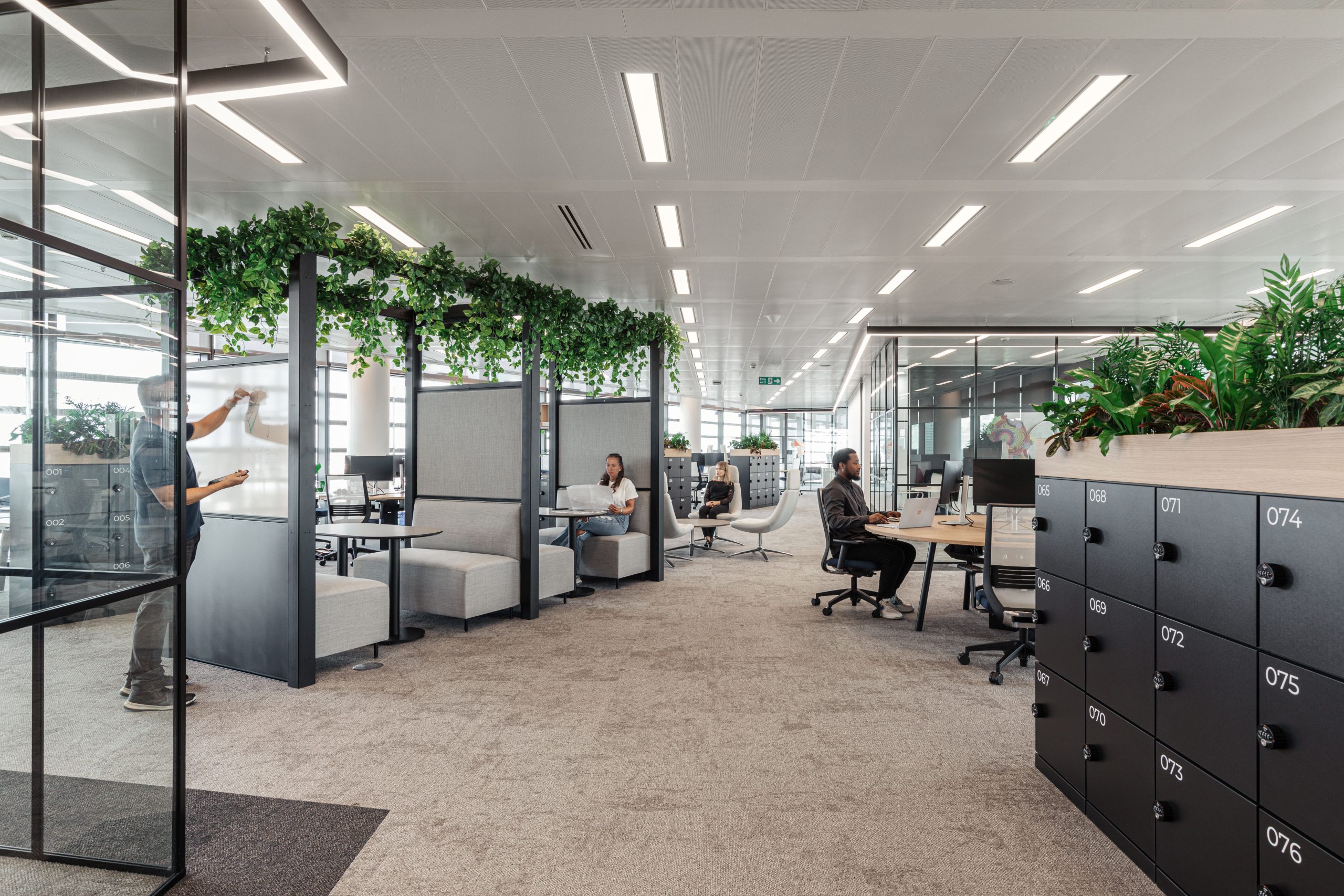
Biophilic design can be introduced in a range of ways, from simple additions of planting through to fully integrated environmental systems. At its simplest, this might mean increasing natural greenery and daylight. At a more advanced level, it involves embedding natural processes into the building itself – from ventilation and materials to spatial layout and infrastructure.
Plant-Based Air Filtration
For Knightsbridge-based private equity firm, Investindustrial, we introduced the PNAT Air Factory, a system that uses plants to naturally filter indoor air. As air passes through living root systems, pollutants are absorbed and broken down, while real-time sensors monitor air quality and system performance. The result is a workspace that actively improves air quality while making the process visible to occupants.
Spatial “Green Islands”
At MSQ Partners, workstations were arranged around planted islands, creating informal neighbourhoods within the office. This approach softens the workspace, improves flow, and encourages more natural collaboration between teams.
Living Walls and Natural Partitions
Living walls and large-scale planting can be used to define space without hard barriers. In Smart Pension’s office, extensive planting, natural materials and a full-height living wall were used to create a calmer, more restorative working environment rooted in wellbeing and sustainability.
Biophilic Design in Practice
Across modern workplace projects, biophilic principles are being used in increasingly creative ways to support both wellbeing and performance.
We’re seeing breakout areas filled with planting that offer quieter, more relaxed spaces for collaboration or focus. Large glazing and open sightlines are being used to maintain a visual link to the outside world, even in dense urban settings.
Natural materials are also being introduced more broadly across furniture, finishes and flooring to create a more consistent sense of calm and warmth throughout a space. A recent study in Discover Environment even demonstrated that moving employees from a concrete-dominated office to a timber-rich one measurably reduced chronic stress and lowered long-term cortisol levels.
The Future of Workplace Design
As organisations continue to compete for talent and prioritise employee wellbeing, biophilic design is moving from a “nice-to-have” aesthetic to a core workplace strategy. It sits squarely at the intersection of sustainability, wellbeing and performance – three of the most important drivers shaping workplace design today.
This shift is already being codified across the UK, with major green building standards like BREEAM and the SKA Rating now making measurable biophilic integration a highly sought-after requirement for premium commercial property certification.
Ultimately, the question is no longer whether nature belongs in the workplace, but how deeply it should be integrated into it.
Want to Bring Biophilic Design Into Your Workplace?
Speak to our team to understand how nature-led design could help your space perform better for your people.
You May Also Like
Turn Strategy Into a Workplace Brief
17th July, 2026
Negotiation Is About Leverage, Not Discounts
17th July, 2026
Commercial Control Before Construction Starts
16th July, 2026
The ‘Day One Readiness’ Walkthrough
16th July, 2026
Protecting Your Real Estate Strategy
15th June, 2026
The Role of Technology in Modern Workplace Design
15th June, 2026