
Can Your Office Strengthen Company Culture?
1st June, 2026
HOW WORKPLACE DESIGN CAN SUPPORT CONNECTION, FLEXIBILITY AND CULTURE WHEN PEOPLE NO LONGER COME IN EVERY DAY
Hybrid working didn’t kill the office – it’s forced it to evolve.
For most businesses, the workplace is no longer somewhere employees simply “go to work”. People now expect greater choice in where and how they work, while organisations still need physical spaces that support collaboration, performance and company culture.
The challenge is designing workplaces that achieve both.
That’s where design matters most.
The Office Has a New Role
Traditional offices were built around desks and routine. Hybrid working changed that model almost overnight.
Today, the most effective workplaces are designed around human experience rather than occupancy. They support a wider range of working styles while giving employees a clear reason to gather in person. This is especially important for early-career Gen Z talent, who actively seek out the professional development, social networking, and hands-on coaching that physical environments provide.
Flexibility Beyond Remote Working
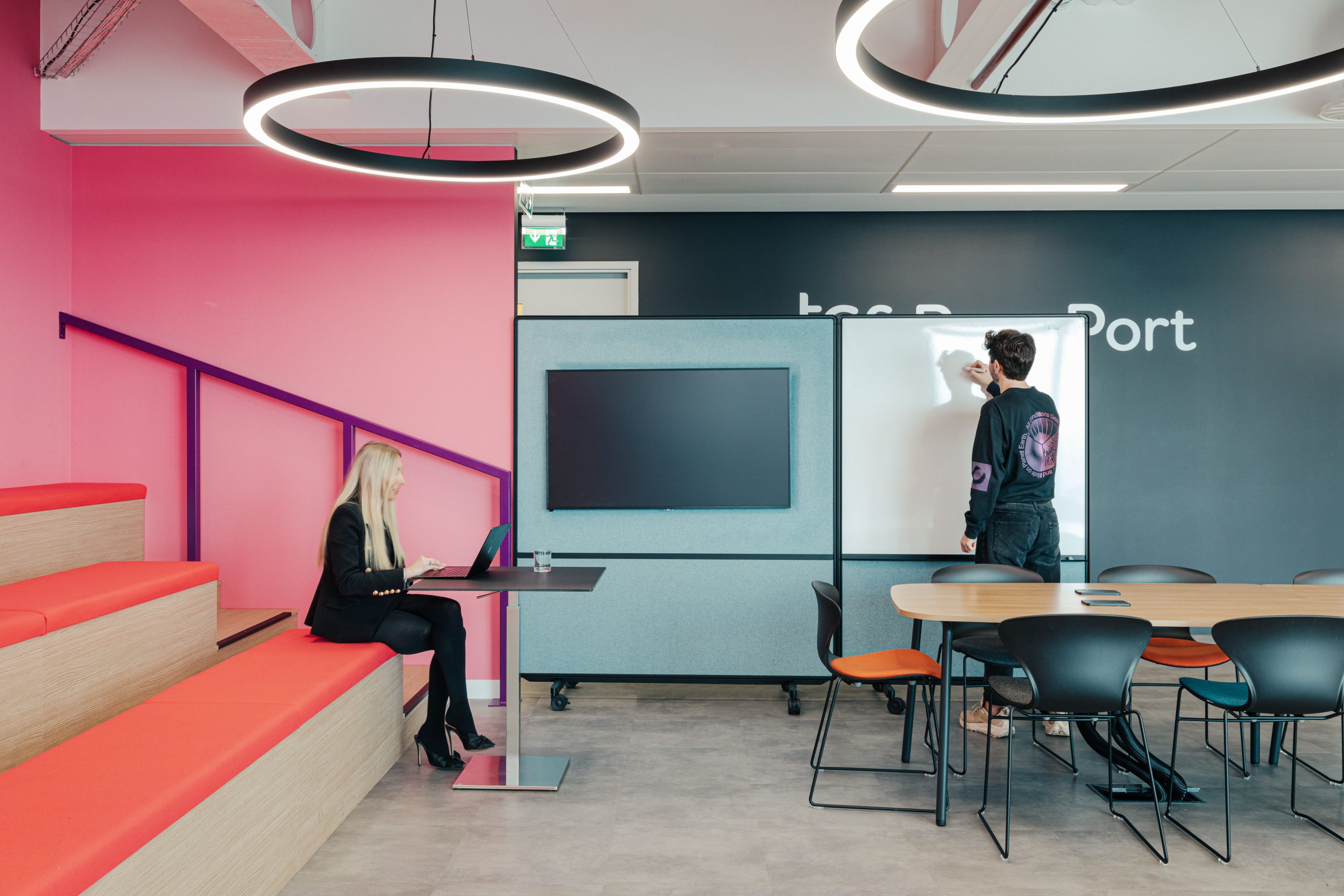
Flexibility is about creating environments that support different tasks, working styles and levels of interaction throughout the day.
While some employees thrive in energetic social settings, others desperately need quieter areas. In fact, 40% of flexible space users actually prefer a conventional office setup because open, shared layouts frequently lack the privacy necessary for high-concentration tasks.
The best workplaces accommodate both through a mix of spaces including:
- Open collaboration areas
- Quiet focus spaces
- Informal lounges and café settings
- Flexible meeting rooms
- Private booths for calls and video meetings
- Multi-functional social spaces
Instead of rows of fixed desks, workplaces are becoming more agile, adaptable and experience-led.
Designing for Connection and Culture
One of the biggest risks of hybrid working is disconnection. When teams spend less time together physically, layout and spatial planning play a major role in encouraging interaction.
Social hubs, shared amenities and adaptable communal spaces help create opportunities for spontaneous conversation throughout the day. The workplace itself becomes a physical expression of company culture.
As Peter Williams, Senior Technical Advisor at Stanhope, notes “The increased flexibility we’re seeing in office design is recognition that offices are ultimately spaces for people to come together, spark new ideas and collaborate”.


Creating Offices People Actually Want to Use
The best hybrid workplaces don’t try to recreate working from home – they offer something distinctly different. Survey data reveals that 92% of workers could be convinced to return to the office more frequently if offered the right incentives, such as greater privacy, better technology, or subsidised food.
Comfort, hospitality, and atmosphere now dominate workplace design. To engage employees, businesses are creating less corporate, more experiential environments – like social hubs, nature retreats, or mocktail bars – that prioritise wellbeing alongside usability.
Hybrid Working Is Shaping the Future of Design
Hybrid working has permanently changed expectations around the workplace.
Businesses are rethinking how much space they need, how it’s used and what employees value most from being there. In response, office design is becoming more adaptable, people-focused and strategically aligned to how organisations actually work today.
The result is a new generation of workplaces designed not just for productivity – but for flexibility, culture and long-term performance.
Create a Workplace Built for Modern Working
Speak to the Maris team about designing workplaces that support flexibility, collaboration and the evolving needs of your people.
You May Also Like
Turn Strategy Into a Workplace Brief
17th July, 2026
Negotiation Is About Leverage, Not Discounts
17th July, 2026
Commercial Control Before Construction Starts
16th July, 2026
Will Your New Office Work on Day One?
16th July, 2026
How to Choose the Right Property Adviser
15th June, 2026
What Technology Should Actually Do in Your Workplace
15th June, 2026